


Herniated Disc vs. Degenerative Disc Disease: What’s the Difference?

Back pain isn’t always caused by the same underlying issue. Two commonly confused conditions — degenerative disc disease (DDD) and herniated discs — are closely related but differ in how they develop, present, and are treated.
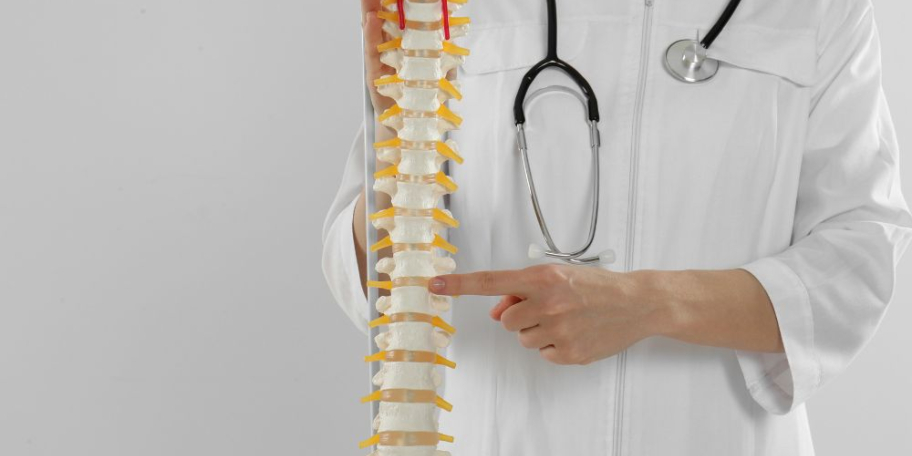
A herniated disc occurs when the nucleus, the soft inner material of a spinal disc located between the vertebrae, pushes through a tear in the disc’s outer layer. Degenerative disc disease, on the other hand, occurs when spinal discs begin to break down over time. As discs lose hydration and flexibility with age, they become less effective at absorbing shock. Physical activity, sports, and injuries can also contribute to this wear and tear.
Symptoms of Herniated Disc vs. Degenerative Disc Disease
Herniated discs and degenerative disc disease can be accompanied by a range of symptoms, with some overlap.
Herniated Disc Symptoms
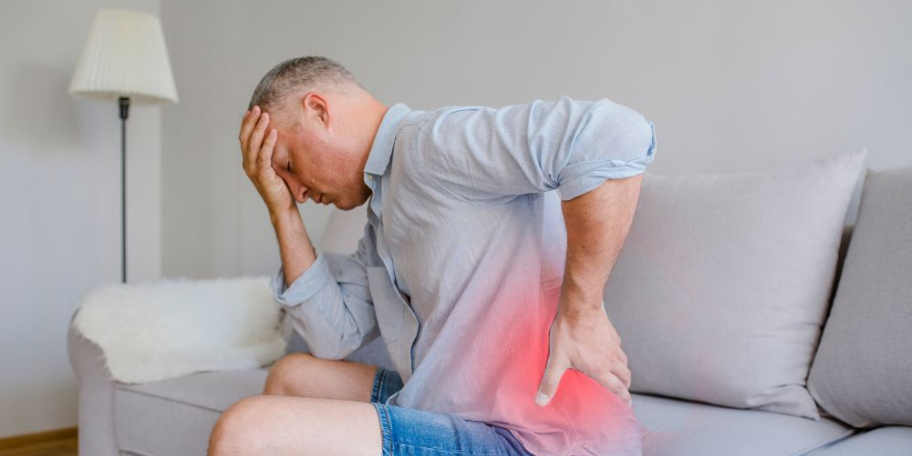
Herniated discs often occur in the lower back but can also affect the neck. Symptoms vary depending on the location of the affected disc. In many cases, only one side of the body is affected.
If you’re suffering from a herniated disc, you may experience:
- Pain that starts suddenly after a strain or injury
- Severe, sharp, shooting, aching, or burning pain
- Back and/or neck pain, sometimes radiating to the arms or legs
- Numbness or tingling in the area with affected nerves
- Muscle weakness in the area with affected nerves
- Lower back, buttock, thigh, or calf pain (caused by herniated discs in the lower back)
- Shoulder and arm pain (caused by herniated discs in the neck)
- Pain that worsens with movement
- Bladder/bowel issues (in severe cases)
- Stiffness, often worse in the morning
- Flare-ups of severe pain, numbness, or mobility issues
Although herniated discs often result in sudden pain following an injury, accident, or strain, some people may experience gradual worsening of pain or no symptoms at all.
Degenerative Disc Disease Symptoms
Degenerative disc disease is often age-related and commonly causes lower back pain, though some people experience little to no symptoms.
Common symptoms of DDD include:
- Pain, often in the lower back only
- Pain made worse by forward bending or carrying heavy loads
- Pain in the hips, thighs, and buttocks
- Worsening pain when changing positions
- Pain that improves when shifting activities (e.g., going from walking to sitting)
- Radiating pain that moves from the back to other areas like the hands, arms, or shoulders
- Relief when lying flat on the back
- Numbness and tingling in the arms, legs, hands, or feet
- Chronic neck pain
- Stiffness, often worse in the morning
- Bladder/bowel issues (in severe cases)
- Flare-ups of severe pain, numbness, or mobility issues
Herniated discs and DDD have some common symptoms, including stiffness, numbness and tingling, and back pain. Evaluating other symptoms, taking into account variables like lifestyle and age, and consulting with a doctor will help differentiate between the two conditions.
Treatment Options for Herniated Disc vs. Degenerative Disc Disease
There are many treatment options available to reduce the symptoms associated with herniated discs and DDD.
Treatment options for herniated discs include:
- Periods of rest
- Anti-inflammatory medications (NSAIDs)
- Nerve-pain medications to reduce inflammation and ease pain
- Muscle relaxants for spasms or neuropathic pain (chronic nervous system pain)
- Epidural steroid injections (injected directly into the spine to reduce pain and inflammation)
- Physical therapy
Treatment options for degenerative disc disease include:
- Anti-inflammatory medications (NSAIDs)
- Physical therapy
- Heat/ice therapy
- Weight loss strategies to reduce stress on spinal discs
- Epidural steroid injections
- Radiofrequency ablation (RFA), a minimally invasive procedure using heat to disrupt nerves causing pain
- Artificial disc replacement surgery, in severe cases (removing damaged discs and replacing them with implants to relieve pain and improve mobility)
- In severe cases, spinal fusion surgery — a procedure that connects two or more spinal vertebrae so they fuse into a single, stabilized bone.
Get Help for Herniated Discs or Degenerative Disc Disease
If you’re suffering from persistent or worsening symptoms or are concerned you may have degenerative disc disease or a herniated disc, it’s important to seek professional care. To learn more, schedule a consultation with the experts at Visco Spine and Joint Center.